The secret hiding in plain sight
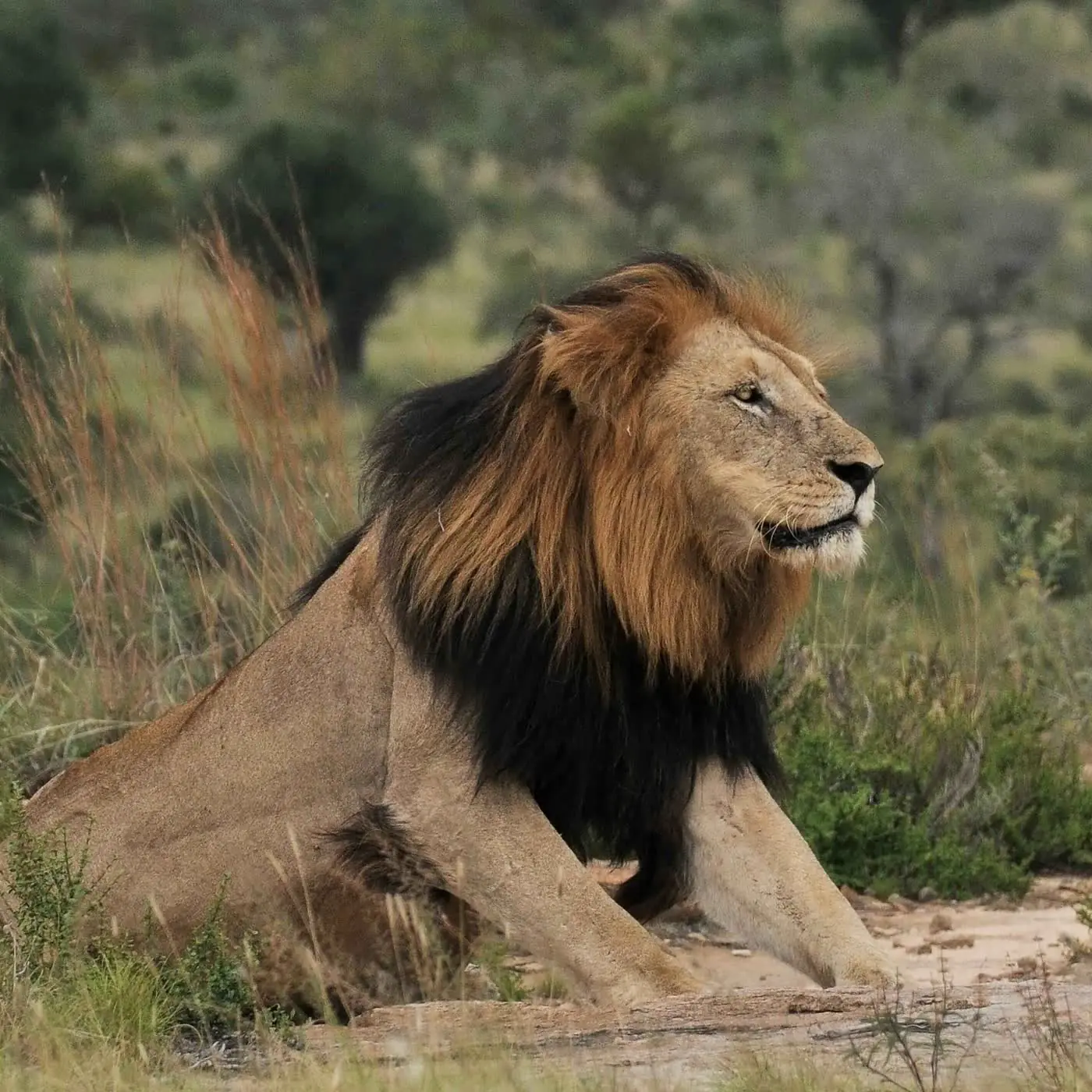
Here is something that surprises almost every first-time guest I plan a safari for: some of the best game viewing in the Maasai Mara ecosystem doesn’t happen inside the Maasai Mara National Reserve. It happens on the private conservancies that wrap around its northern and eastern boundaries — Mara North, Naboisho, Ol Kinyei, Olare Motorogi and their neighbours — where the same lions, leopards and elephant herds roam, but the rules of the game are completely different.
Together, these conservancies now protect a stretch of savannah approaching the size of the reserve itself. Yet most safari-goers have never heard of them, because most operators sell “the Mara” as a single destination. It isn’t. Where you sleep and where you drive inside this ecosystem changes everything: how many vehicles share your leopard, whether your day ends at sunset or continues under a spotlight, and whether your money reaches the Maasai families whose land this is.
This is the guide I give guests over coffee in Nairobi, written down. What a conservancy actually is, why we book them, and an honest comparison of the four we rate most highly.
What a private conservancy actually is
The land around the reserve belongs to Maasai families — thousands of individual landowners, each holding title to a parcel of savannah. A conservancy is what happens when hundreds of those families agree to pool their parcels into one protected area, move their settlements and most of their cattle off it, and lease it to a small group of safari camps. In return, every landowner receives a guaranteed monthly payment, rain or shine, tourists or none.
That structure is the whole magic. Because the camps pay for exclusivity, they have every incentive to keep the land wild and the vehicle numbers tiny. Because the payments are guaranteed, families have every incentive to keep wildlife on the land rather than fence it for grazing. Lions stopped being a cost and became an income. It is, quietly, one of the great conservation successes in Africa — wildlife numbers across the conservancies have recovered dramatically since the first leases were signed in the 2000s.
When you pay a conservancy fee — typically $120–$230 per person per night, usually built into your camp rate — you are not paying a park ticket. You are paying rent, directly, to the community that chose wildlife over fences. I find guests sit a little differently in the vehicle once they understand that.
Why we book conservancies: the rules that change your safari
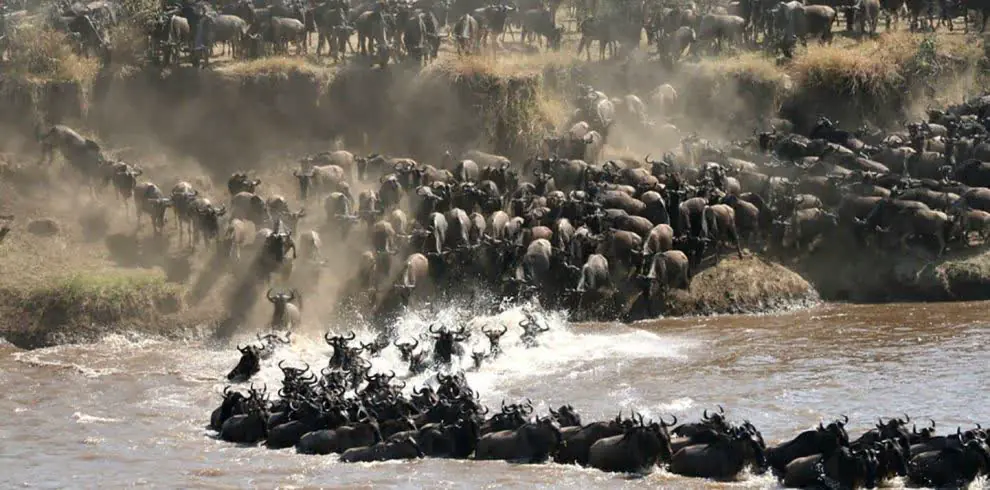
Inside the national reserve, the rules are built for volume: driving is restricted to tracks, gates close around sunset, walking is prohibited, and there is no cap on how many vehicles can gather at a sighting. In August, a good leopard in the reserve can draw a car park. The reserve is still magnificent — the river crossings alone justify it — but you share it.
A conservancy inverts every one of those rules. Access is restricted to guests of its member camps, and total beds are capped, so the land stays close to empty: on the strictest conservancies there is roughly one guest bed per several hundred acres. Sightings are limited to a handful of vehicles — five is the usual ceiling, and two or three is the reality — so you watch a hunt unfold in something like privacy.
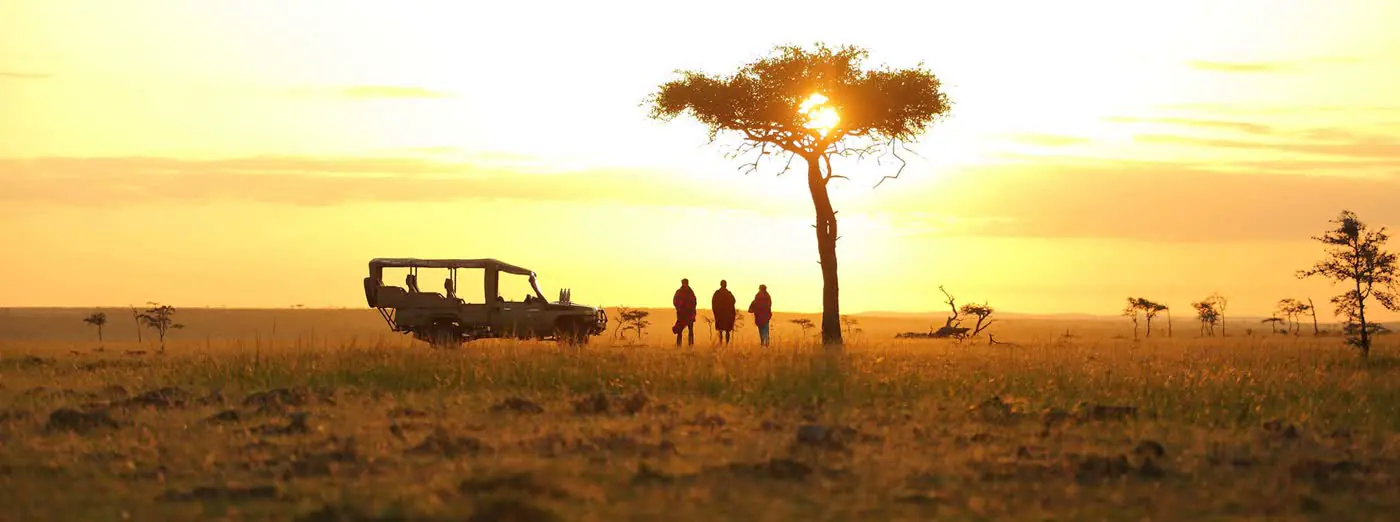
Then there is what you’re allowed to do. Guides can drive off-track for significant sightings, which means positioning for the light rather than craning past six other bonnets. Night drives are permitted — an entirely different Mara of bat-eared foxes, aardwolves, hunting lions and genets that reserve guests never meet. And you can walk: a guided bush walk with a Maasai naturalist, reading tracks and dung and grasses at ground level, is the single experience guests tell us re-framed their whole safari.
One honest nuance, because we’d rather you hear it from us: within most conservancies, game drives are run by the member camps’ own guides in the camps’ vehicles — that is part of how the exclusivity is enforced. Our role is to build the itinerary, match you to the right conservancy and camp, secure a private vehicle there when you want one, and run everything outside the conservancy — your transfers, your reserve days, your crossings in August — in our own photographic Land Cruisers.
The four conservancies, side by side
There are more than a dozen conservancies in the Greater Mara, but four sit at the top of our booking sheet year after year — and the debate we referee most often is Mara North vs Naboisho, the two heavyweight all-rounders. Here is how all four compare at a glance, then a proper look at each.
| Approx. size | Character | Camps & beds | Signature strengths | Book it for | |
|---|---|---|---|---|---|
| Mara North | ~70,000 acres | The big, varied one — riverine forest, open plains, and the famous Leopard Gorge | A dozen member camps; the widest choice of styles and prices | Year-round resident game, classic big-cat country, easiest to match to a budget | First-timers who want conservancy privileges with plenty of camp options |
| Naboisho | ~50,000 acres | Wild and community-forward — its name means “coming together” in Maa | A handful of intimate camps for 500+ landowning families | One of the highest lion densities in Africa; superb walking safaris and fly-camping | Big-cat lovers and anyone who wants to walk, not just drive |
| Ol Kinyei | ~18,700 acres | The pioneer and the most exclusive — one of the first conservancies, kept deliberately tiny | Just a couple of small camps in the entire conservancy | Near-total solitude; multi-award-winning conservation record | Honeymooners and returning safari-goers who want the Mara to themselves |
| Olare Motorogi | ~35,000 acres | The connoisseur’s choice — strictest bed density, directly on the reserve boundary | Five celebrated camps, fewer than 100 beds in total | Exceptional big-cat viewing; drive straight into the reserve for crossings | Photographers and August guests wanting crossings by day, silence by night |
Mara North: the all-rounder
Mara North is the largest of the four, a sweep of roughly 70,000 acres against the reserve’s northwestern shoulder, held by a partnership between around 800 Maasai landowners and a dozen member camps. Its landscapes are the Mara’s greatest hits in one conservancy: open plains thick with topi and zebra, acacia woodland, and the rocky outcrops of Leopard Gorge — ground made famous by the BBC’s Big Cat Diary, and still one of the most reliable leopard territories in the ecosystem.
Because it has more camps than its neighbours, Mara North is also the easiest conservancy to book across a range of budgets and styles, from family-friendly lodges to small owner-run bush camps. If it is your first safari and you want the conservancy experience without the scarcity — and price tag — of the tiniest conservancies, this is usually where I start the conversation.
Naboisho: lions, walking and the strongest community story
Mara Naboisho, established in 2010 just northeast of the reserve, is where the community model shows its full strength: more than 500 Maasai families pooled around 50,000 acres and capped tourism at a handful of intimate camps. The result is a conservancy that regularly records one of the highest lion densities anywhere in Africa — resident prides you will often have entirely to yourselves — along with superb cheetah viewing on its open ridges.
Naboisho is also the conservancy we recommend most for experiences beyond the vehicle: its guiding culture is exceptional, and guided bush walks and even fly-camping under the stars are done here as well as anywhere in Kenya. If your picture of a safari includes your own footprints in it, this is your conservancy.
Ol Kinyei: the Mara, privately
Ol Kinyei is the smallest and the quietest of the four — about 18,700 acres in the ecosystem’s east, and one of the earliest conservancies, its first leases signed back in 2005. What makes it extraordinary is its discipline: the landowners and their camp partners have kept it to just a couple of small camps in the entire conservancy, and its conservation record has collected international awards for years.
The arithmetic is the experience. A few dozen guests, at most, across nearly nineteen thousand acres means you can spend a full day on game drives — lions at a kill, elephant families in the valleys, cheetah on the ridgelines — and never see a vehicle that didn’t leave your own camp. For honeymooners, and for returning safari-goers who remember what crowds did to their last leopard, Ol Kinyei is the answer.
Olare Motorogi: the photographer’s conservancy
Olare Motorogi began in 2006, when families holding some 35,000 acres directly north of the reserve pooled their land — and its founding camps made a promise that still defines it: the strictest bed density in the Mara, roughly one guest bed per 700 acres, under 100 beds in the whole conservancy. Its five camps are some of the most celebrated in Africa, and its big-cat viewing — huge resident lion prides, habituated leopards along its river lines, cheetah on the plains — is as good as this ecosystem offers.
Its trump card is geography. Olare Motorogi shares a border with the national reserve itself, which means that in crossing season your guide can drive you into the reserve for the Mara River drama in the morning and bring you home to a conservancy sundowner, a night drive, and total silence. In August, that combination is close to unbeatable — and it is exactly how we build our migration itineraries for guests who can secure the beds.
The honest trade-offs
Conservancies are not a secret cheat code without costs, and you should hear the trade-offs plainly. First: the river is in the reserve. If the August crossings are your priority, a conservancy-only itinerary in the far east of the ecosystem puts you a long drive from the water — which is why we usually pair a conservancy with reserve access, either by choosing one on the boundary like Olare Motorogi or by splitting your nights between conservancy and reserve-side camps.
Second: cost. Exclusivity is the product, and the conservancy fee on top of intimate camps means these stays are rarely the cheapest way into the Mara — though when you compare like for like, and remember the reserve’s own fee now stands at $200 per adult per day in peak season, the gap is smaller than most guests expect. Third: scarcity is real. A conservancy with forty beds sells out its August a year ahead. If this guide has convinced you, it has also just told you to book early.
And one more thing worth saying: some conservancies have minimum-age policies at certain camps, and walking safaris carry their own age limits. Travelling as a family is absolutely possible — Mara North and Naboisho both do it well — but tell us the children’s ages first and we will steer you to the camps that welcome them warmly.
How we would build it for you
If you take one planning principle from this guide, take this one: don’t choose between the conservancies and the reserve — sequence them. Our favourite Mara itinerary runs four to six nights: the first half in the reserve or on its boundary for the marquee spectacle (crossings in season, the full theatre of the plains year-round), the second half deep in a conservancy, where the safari slows down, opens up after dark, and finally gets out of the vehicle and onto the grass.
Which conservancy? By now you can probably answer it yourself: Mara North for range and value, Naboisho for lions and walking, Ol Kinyei for solitude, Olare Motorogi for photography and crossing-season geography. Tell us what you want your mornings to look like — on the plan-your-safari page or over WhatsApp — and we will match you to the conservancy, the camp, and the season honestly. It’s our home ground, and we book it the way we’d book it for our own families.
Questions travelers ask
What is the difference between the Maasai Mara National Reserve and a private conservancy?
The reserve is government-managed and open to any visitor who pays the daily fee, with no cap on vehicles, no off-road driving, no night drives and no walking. A conservancy is Maasai-owned land leased to a small number of member camps: access is limited to their guests, sightings are capped at a few vehicles, and off-road driving, night drives and guided walks are allowed.
Which is the best conservancy in the Maasai Mara?
There is no single best conservancy — there is a best fit. Mara North offers the widest choice of camps and budgets; Naboisho has one of Africa’s highest lion densities and the finest walking; Ol Kinyei is the most exclusive and quiet; Olare Motorogi combines the strictest vehicle-to-land ratio with a border on the reserve itself, ideal in crossing season.
Mara North vs Naboisho — which should I choose?
Choose Mara North for variety and value: it is the largest of the four, with a dozen camps across a wide price range and the famous Leopard Gorge in its backyard. Choose Naboisho for intensity and intimacy: fewer camps, one of the highest lion densities in Africa, and the best walking-safari culture in the ecosystem. On game viewing alone, neither disappoints — the honest tiebreakers are budget, camp style and whether walking matters to you.
Can I see the Great Migration river crossings from a conservancy?
The crossings happen on the Mara River inside the reserve, but conservancy guests can drive in for the day — pay the reserve fee and go. Olare Motorogi borders the reserve directly, making it the most practical conservancy base for crossing season; from the eastern conservancies it is a longer run, so we often split nights between conservancy and reserve-side camps.
How much does a conservancy fee cost?
Most conservancies charge roughly $120–$230 per person per night, almost always bundled into your camp’s nightly rate rather than paid separately. The money funds the guaranteed monthly lease payments to the Maasai landowning families, plus rangers and conservancy management — it is the engine of the whole model.
Are night drives really worth it?
Emphatically yes — they are a different safari. Lions do most of their real hunting after dark, and the spotlight reveals a cast you will never meet at noon: bat-eared foxes, genets, aardwolves, bushbabies, sometimes a leopard on the move. One night drive tends to convert guests for life.
Are the conservancies good outside migration season?
Often better than the reserve. The big cats, elephants and general game are resident — they do not migrate — and in the green season the conservancies pair dramatic skies and newborn animals with almost nobody else on the land. If you travel between November and June, a conservancy-weighted itinerary is usually our first recommendation.