La respuesta corta: de julio a principios de octubre
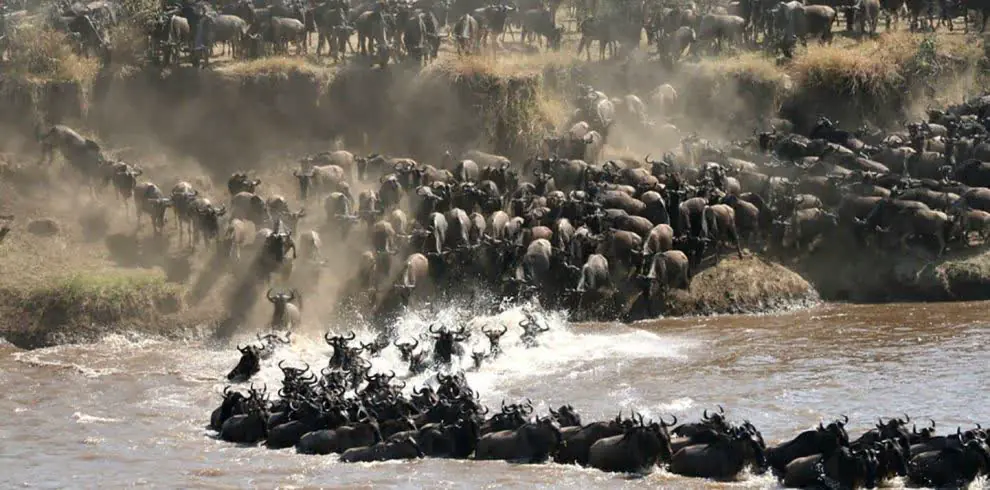
Cada año, más de dos millones de ñus, cebras y gacelas se desplazan en un gran bucle en el sentido de las agujas del reloj entre el Serengeti de Tanzania y el Masái Mara de Kenia. Las manadas suelen empezar a entrar en el Mara en julio, van creciendo durante agosto y permanecen en grandes números hasta que la hierba fresca de las lluvias cortas las empuja de nuevo hacia el sur a finales de octubre o en noviembre.
Si tu prioridad es presenciar un cruce del río Mara —ese salto turbulento y vigilado por cocodrilos del que están hechos los documentales—, la ventana más fuerte va de finales de julio a septiembre. Dentro de esa ventana, nadie puede prometer un cruce en un día concreto. Las manadas se agolpan en la orilla, dudan durante horas, cruzan en estampida o se dan la vuelta por completo. Esa imprevisibilidad es precisamente la razón por la que el diseño del viaje importa.
Mes a mes en el Mara
Junio: la vanguardia llega al norte del Serengeti y las primeras manadas tantean el río Sand hacia el Mara. La observación de fauna residente ya es excelente y los lodges están más tranquilos que en temporada alta.
Julio: el impulso crece. Grandes columnas entran en la reserva y los primeros cruces importantes del río Mara suelen producirse de mediados a finales de mes.
Agosto y septiembre: el corazón de la temporada. Las megamanadas se extienden por las llanuras del Mara, los cruces de río se repiten en ambos sentidos y la actividad de los depredadores alcanza su máximo; es también cuando la demanda de camps es más alta.
Octubre: las manadas empiezan a derivar hacia el sur, pero aún hay cruces a principios de mes y la reserva se siente notablemente más tranquila. Una elección inteligente para quien quiere el dramatismo de la migración con menos vehículos.
De noviembre a mayo: la migración está en el Serengeti, pero el Mara está lejos de estar vacío: mantiene todo el año poblaciones excepcionales de león, leopardo, elefante, guepardo y más. Febrero y marzo ofrecen una luz preciosa, llanuras verdes y el valor de la temporada baja.
Cómo te colocamos para un cruce
Los cruces no se pueden programar; solo se pueden anticipar. Nuestros guías leen cada mañana la acumulación de manadas, los partes por radio de los camps y el estado del río, y después se colocan temprano en la orilla correcta y esperan con comodidad —desayuno en el vehículo, cámaras listas— en lugar de salir corriendo cuando un cruce ya está en marcha.
También recomendamos al menos tres noches en el Mara durante la temporada de migración. Las estancias de una noche lo apuestan todo a una sola mañana; tres o cuatro días dejan que el río venga a ti.
Preguntas frecuentes de los viajeros
¿Se puede garantizar un cruce de río?
No: los cruces dependen del movimiento de las manadas, de la lluvia y del estado del río. Quedarse tres noches o más entre finales de julio y septiembre da las mejores probabilidades realistas, y tu guía te colocará temprano siempre que las manadas se agolpen cerca del río.
¿Merece la pena visitar el Masái Mara fuera de la temporada de migración?
Sí. El Mara tiene una fauna residente excepcional todo el año, incluidos todos los grandes felinos. De enero a marzo ofrece paisaje verde, crías recién nacidas y recorridos más tranquilos a menor coste.
¿Con cuánta antelación debería reservar un safari de migración?
Para agosto y septiembre, los mejores camps junto al río se agotan de 9 a 12 meses antes. Reservar pronto asegura además mejor disponibilidad de guía y vehículo.