The straight answer first
In most years, the Mara River crossings run from mid-July to late September, peaking in August, with stragglers into early October. The herds arrive in the Mara from the Serengeti’s north, and for those weeks the river becomes the most dramatic stage in the natural world.
But if you take one thing from this post, take this: a crossing is not an event you book. It’s an event you earn — with patience, positioning, and a guide who has spent years learning how wildebeest think. That last part is what this guide is really about, because it’s the part no brochure explains.
First, what actually happens at a crossing
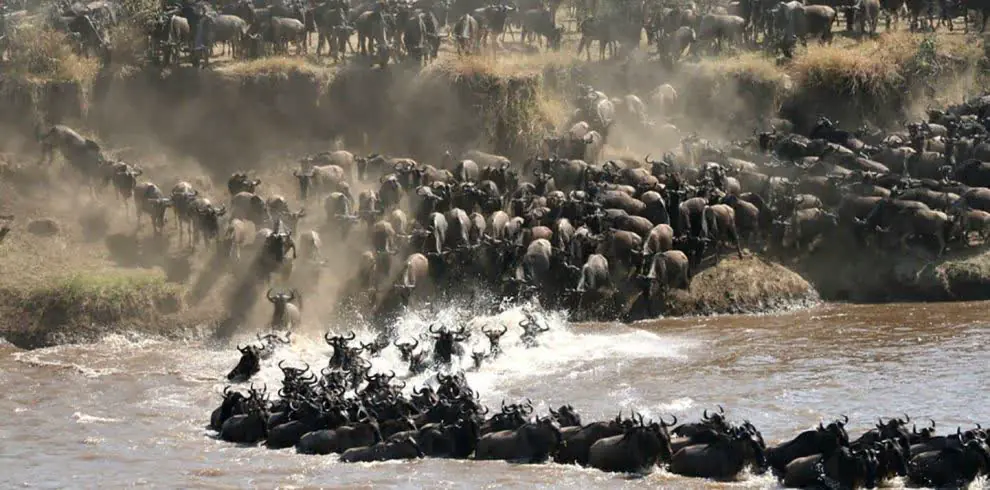
Picture a hundred thousand animals on an open plain, all drifting the same direction, pulled by the smell of rain and fresh grass on the far side of a brown river. They arrive at the bank. And then — nothing.
They mill. They graze. They stare at the water. Minutes pass, then an hour. The pressure builds from behind as more animals arrive, thousands deep. Zebras, the sensible ones, walk the bank studying the water. Somewhere in the crush, one wildebeest edges down the slope, hesitates — and jumps.
After that, it’s an avalanche. The entire mass funnels down the bank and into the river: spray, dust, that strange honking roar of thousands of animals, crocodiles cutting lines through the churn, animals scrambling up the far bank slick with mud. It can be over in twenty minutes. The plain that took hours to fill empties across a river in the time it takes to drink a coffee — and everyone in the vehicle sits in silence for a moment afterwards, because there’s nothing to say.
That’s what you’re coming for. Now, the honest part: how you actually get to see it.
The three truths of crossing season
Truth one: nobody can guarantee a crossing. Not us, not anyone. Herds can stack up at a bank for six hours and then turn around and walk away because the wind changed or a crocodile surfaced at the wrong moment. If an operator guarantees you a crossing, they’re guaranteeing something wildebeest haven’t agreed to. On a 3–4 day Mara stay in August your odds are genuinely good — but it’s odds, not a schedule. This is precisely why we recommend at least four days in the Mara during migration season, not two.
Truth two: the waiting is most of it. A serious crossing attempt often means parking in the right place and waiting — sometimes for hours, engine off, in the sun. Bring a hat, bring patience, and trust the process. The guests who struggle in crossing season are the ones expecting a highlights reel; the guests who have the time of their lives are the ones who settle in and watch the pressure build. The build-up is the show. The plunge is just the finale.
Truth three: you will have company. A promising bank in August draws vehicles from every camp in earshot. It’s still overwhelming and magnificent — but if untouched solitude is your priority, read our month-by-month Mara guide here in the Journal and consider February or the green season instead, or talk to us about the private conservancies where vehicle numbers are capped.
Where the crossings happen
The Mara River snakes through the reserve’s west, and the herds don’t cross just anywhere — they use a set of traditional crossing points, worn into the banks by generations of hooves. Our guides know each one by name and by mood.
The Paradise crossings, near Paradise Plain below Lookout Hill, are the classic, most photographed stretch, with wide banks and usually good vehicle positioning on both sides. The crossing points near the Serena pontoon, on the stretch between the reserve and the Mara Triangle, bring steep, dramatic banks and heavy crocodile presence. And the Sand River crossings in the far south, where the herds first enter Kenya from the Serengeti, are smaller, earlier in the season, and often blissfully quiet because everyone else is waiting at the Mara River.
Beyond these, the guides work with numbered crossing points along the river — each with its own character. Some have gentle banks the herds trust; some are croc ambush alleys the herds fear and use only under pressure. Knowing which is “live” on a given week is pure field craft.
And here’s the detail most first-timers don’t expect: the herds cross in both directions, repeatedly. This isn’t one grand one-way river swim. The animals chase rain back and forth across the river all season — which means crossings can happen for weeks on end, and a herd that crossed west on Tuesday might cross back east on Friday. More chances for you. More chaos for the crocodiles.
How our guides actually predict a crossing
People imagine there’s an app for this. There isn’t. There’s craft. Here’s roughly how a crossing morning works on our side of the radio.
It starts the evening before. At dinner, the guides are already trading notes — where the big herds bedded down, which direction they were drifting at last light, where it rained. Rain is the whole game: wildebeest follow the smell of fresh grass, and a storm on the far bank is tomorrow’s magnet.
5:50am, wheels roll. Not because crossings happen at dawn — they usually happen mid-morning to midday, once the herds have grazed and started moving — but because the guide wants to find the herds and read their direction before anyone else does, with a lion-rich golden hour along the way.
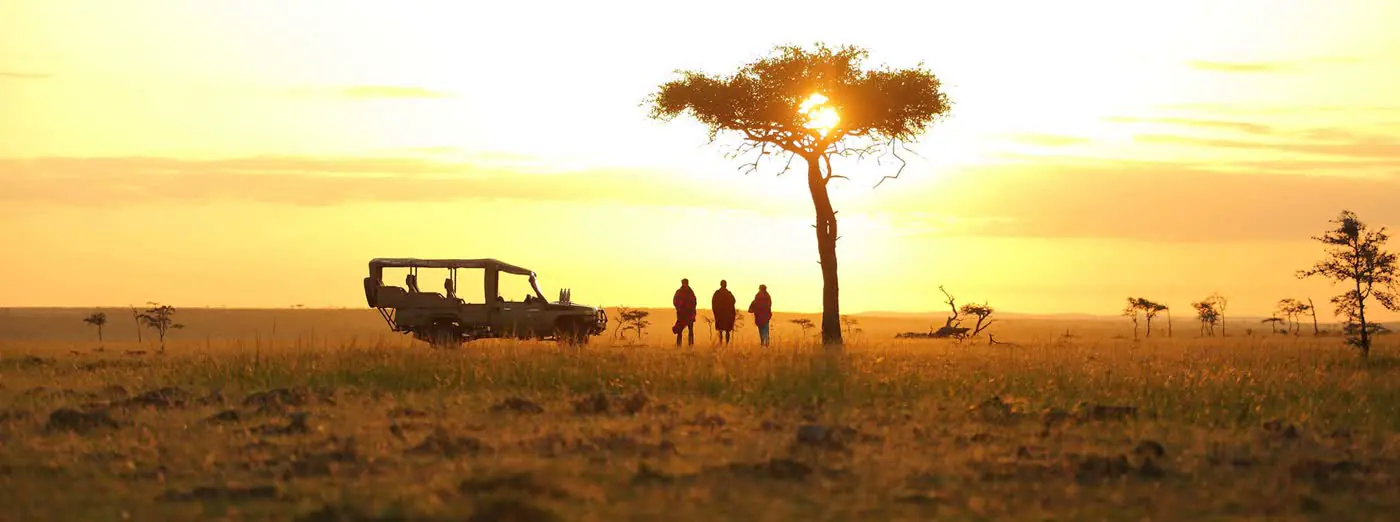
Reading the build-up. A herd that’s going to cross behaves differently from a herd that’s grazing. The column tightens. The drift becomes a march. Animals stack on the high ground above a known crossing point and the noise changes — the grunting gets urgent. When our guide sees a build-up above a bank the herds trust, that’s when the call gets made: position now, on the exit side if possible (that’s where the drama unfolds toward you), engine off, and wait.
Knowing when it’s off. Just as valuable: knowing when to leave. A herd that’s been milling flat for two hours with the wind wrong and crocs showing may be done for the day — and a guide who recognises that saves your afternoon for the leopard on the Talek instead of a sunburnt vigil. Thirty minutes in the right place beats six hours in the wrong one. That judgement is built over many seasons in the same park, and it is, frankly, the thing you’re really paying for in migration season.
Planning your crossing safari: the practical part
How many days? Four in the Mara, minimum, during migration season. Three gives you a fair chance; four gives you a good one; five lets you relax about it. Our 4-day Masai Mara safari is built as exactly this trip, and if you want Amboseli or Naivasha as well, the 6-day Kenya safari weights the Mara days for crossing season on request.
When to book? For July–September 2027, start now — genuinely. The camps positioned near the crossing stretches sell out 9–12 months ahead, and in peak season location is time: a camp thirty minutes from the river beats a prettier one ninety minutes away, because crossings don’t wait for late arrivals.
What it costs? Peak-season rates plus the Mara’s $200-per-adult-per-day reserve fee at its 2026 level — the full honest breakdown is in our Kenya safari cost guide here in the Journal. Budget for peak, or read that guide’s section on the private conservancies, which can put you beside the same ecosystem with fewer vehicles.
Private vehicle or shared? In crossing season this matters more than anywhere else. A shared vehicle leaves when the group votes to leave. A private one waits as long as you and your guide judge it’s worth waiting — and as I’ve just spent a whole post explaining, waiting is the entire strategy. Every White Horse safari is private, with a window seat for every guest, which in August means a camera angle for every guest.
What to bring to the riverbank? Hat, sunscreen, a full water bottle, your longest lens, and something to eat — the good crossings have a habit of starting the moment lunch was supposed to. Ask us for the full packing list when you book.
Is it worth it?
I’ve thought about this question honestly, because peak season asks a lot: peak prices, early starts, hot waits, crowded banks, and no guarantee.
And my answer is yes — without hesitation. There are many wonderful things in the Mara, and I’ve spent a good part of this blog arguing for the quiet seasons. But there is exactly one Great Migration, and a river crossing seen from your own vehicle, called by a guide who read the herd right, is the single most overwhelming thing I can put in front of a guest. People cry. Grown, sensible people. Every season.
If it’s on your list, let’s do it properly. Tell us your dates on the plan-your-safari page or message us on WhatsApp — and if your dates are outside crossing season, don’t close the tab. The Mara has a spectacular answer for every month, and I’ve written a whole guide to choosing yours.
Questions travelers ask
What are the exact dates of the Great Migration in Kenya in 2026?
There are no exact dates — the herds follow rainfall, not calendars. As a reliable planning window: arrivals from mid-July, peak crossing activity in August and early September, and departures south through late September into early October. Build a 4+ day Mara stay inside that window and your odds are strong.
Can you guarantee I’ll see a river crossing?
No — and you should be wary of anyone who says yes. What we guarantee is the approach that maximises your chances: enough days in the Mara, a camp positioned near the crossing stretches, a private vehicle that waits as long as it takes, and guides who track the herds every single day.
What time of day do crossings usually happen?
Most crossings happen from mid-morning to early afternoon, after the herds have grazed and begun moving — though they can happen any time. This is why we structure crossing-season days differently: predators at first light, then to the river as the herds build.
Which side of the Mara River is better?
Both sides produce. The reserve side offers more flexibility to chase build-ups along the eastern bank; the Mara Triangle side is quieter with beautiful escarpment backdrops. The honest answer is that the best side is whichever one the herds are stacking against that week — another reason day-by-day guide knowledge beats any fixed plan.
Is the migration only about the river crossings?
Not at all — and this surprises people. The sheer spectacle of the full herds on the plains, the columns stretching to the horizon, the predator activity that follows them everywhere: many guests rank an ordinary migration-season game drive above the crossing itself. The crossing is the crescendo, but the whole symphony is playing from July to October.
What if I can’t travel in July–September?
Come anyway — in a different month, for different riches. January–March is superb for big cats, and the green season is the Mara at its most beautiful and best value. Our month-by-month guide will match a season to what you want most.