Red elephants and man-eaters
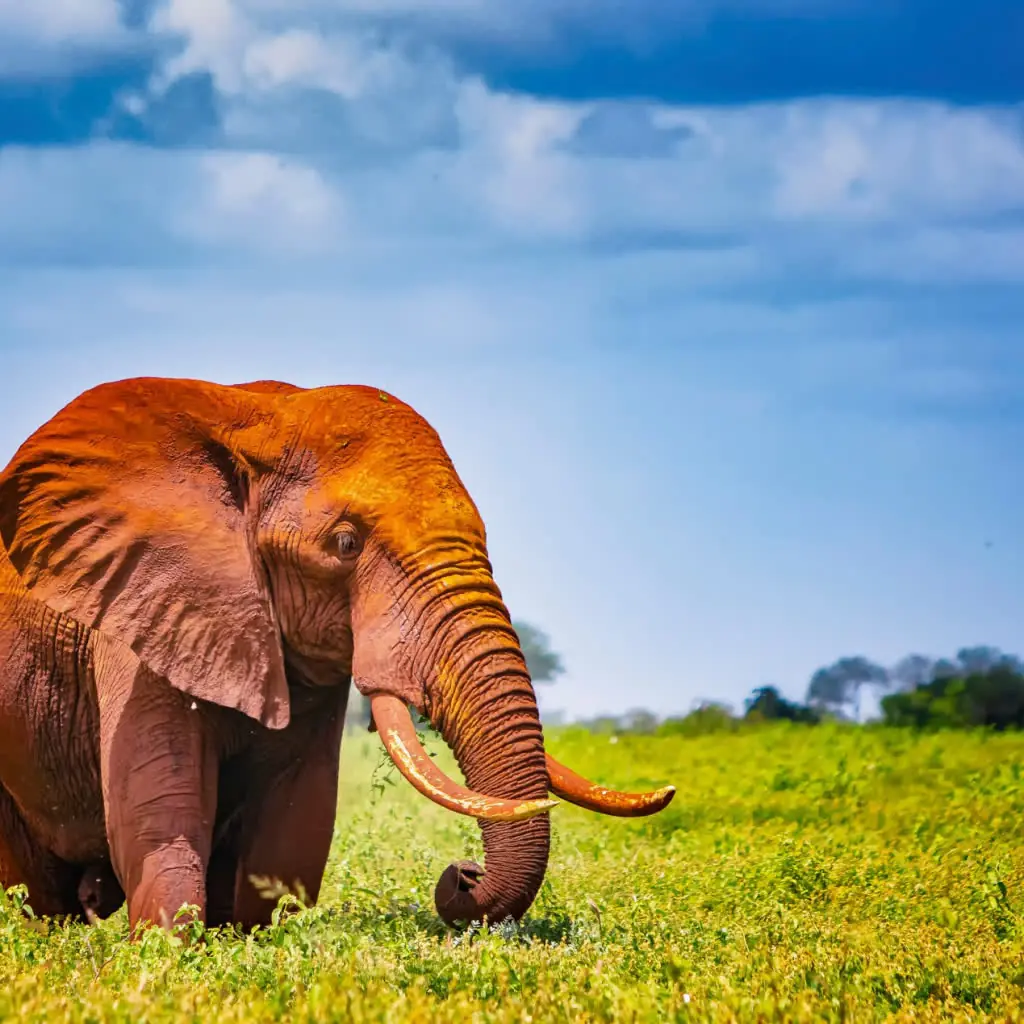
Tsavo’s elephants dust themselves in the park’s iron-rich soil and glow a deep terracotta red — an image found nowhere else. The park’s lions carry history: the infamous "Man-Eaters of Tsavo" of 1898 belong to these thorn thickets, and today’s prides, often maneless males among them, still feel wilder than their Mara cousins.
Both parks hold elephant, lion, leopard, buffalo, giraffe, zebra and profuse dry-country species — gerenuk, lesser kudu, oryx — that you will not see in the Rift Valley parks.
Mzima Springs and the lava lands
In Tsavo West, fifty million gallons of crystal water rise daily from the Chyulu Hills’ lava fields at Mzima Springs, feeding pools where hippos hang in glass-clear water and crocodiles drift below an underwater viewing chamber. The surrounding black lava flows and green volcanic cones make Tsavo West Kenya’s most dramatic driving country.
The bush-to-beach connector
Tsavo’s position between Amboseli and the coast makes it the ideal final safari chapter before Diani Beach. Our Savannah-to-Sea route runs Amboseli → Tsavo → Diani overland, trading airport queues for two extra days of game drives through country most visitors fly over.
Questions travelers ask
Tsavo East or Tsavo West?
East is flatter, more open and better for large elephant herds; West is greener and more dramatic, with Mzima Springs and volcanic scenery. En route to the coast, many itineraries touch both.
Is Tsavo too quiet compared to the Mara?
Sightings take slightly more work than in the Mara — and that is the appeal. You earn your wildlife in Tsavo, often with no other vehicle at the sighting.